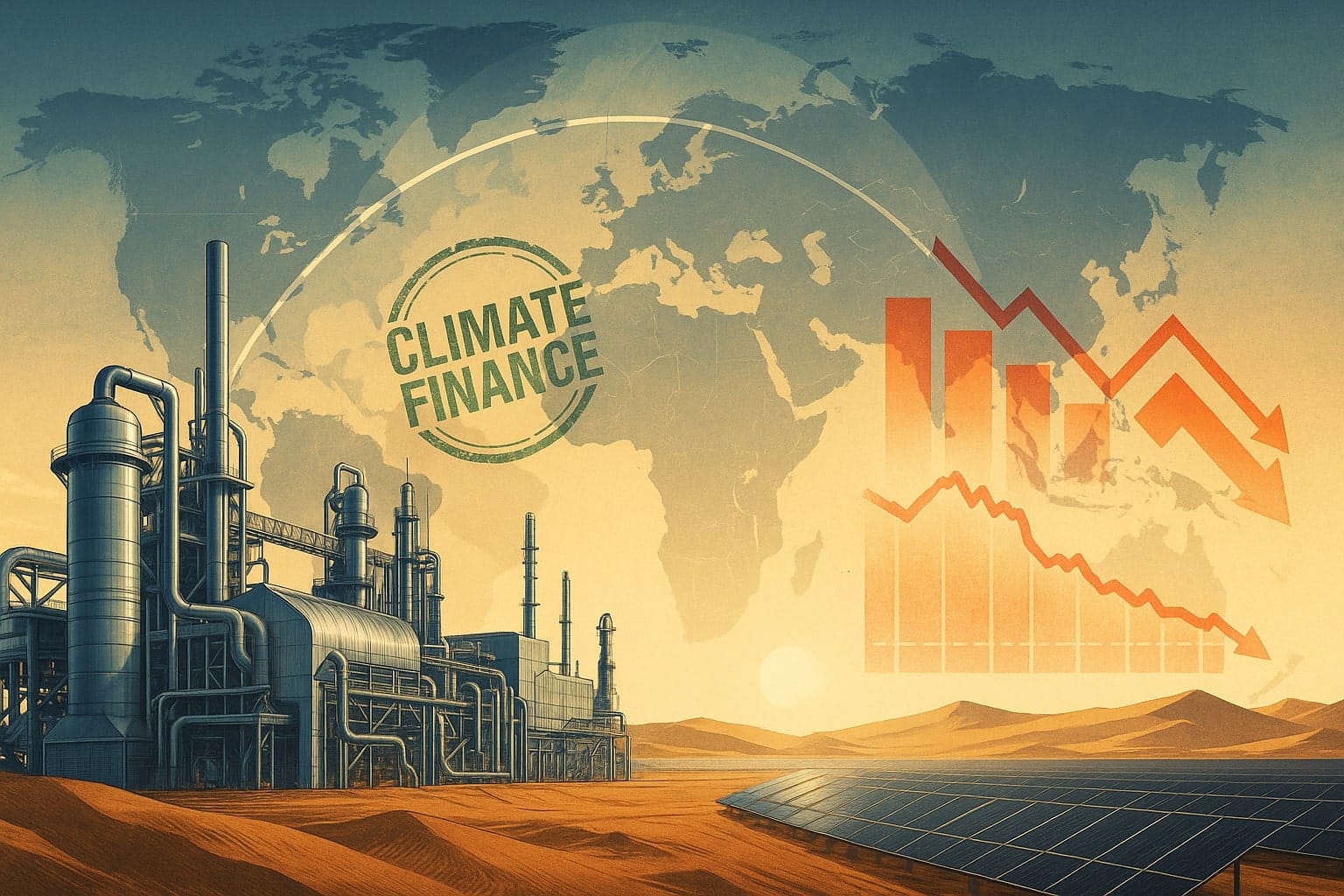
If Beijing restricts exports of advanced solar-manufacturing equipment to the United States, the real vulnerability in America’s clean-energy push will not be panels. It will be the tools, process know-how, and industrial depth required to make them.
For years, the solar trade fight was mostly a fight over finished goods. Washington worried about imported panels and cells, tariff circumvention, and the risks of relying too heavily on Chinese manufacturing. Beijing kept scaling. Now the contest appears to be moving deeper into the stack. Reuters reported on April 15 that Chinese officials have held initial talks with domestic suppliers as they consider limiting exports of the most advanced solar-manufacturing equipment to the United States. No rule has been finalized, and the scope remains unclear. But even the discussion is revealing. It suggests China may be thinking less about defending market share in modules and more about defending control over the means of production.
That matters because the U.S. solar story has recently looked stronger on the surface than it does underneath. The U.S. Energy Information Administration expects utilities and independent power producers to add 26 gigawatts of solar in 2025 and another 22 gigawatts in 2026, after a record 37 gigawatts in 2024. The Department of Energy says the domestic industry now has the capacity to produce enough PV modules to meet U.S. demand. But DOE also says the country still has major gaps in the crystalline-silicon value chain, and will remain reliant on imported wafers and cells until upstream manufacturing scales. The United States currently has just 3.2 GW of solar-cell capacity against 60 GW of module capacity. In other words, America has begun to rebuild assembly. It has not yet rebuilt the full factory system beneath it.
The choke point is no longer the panel
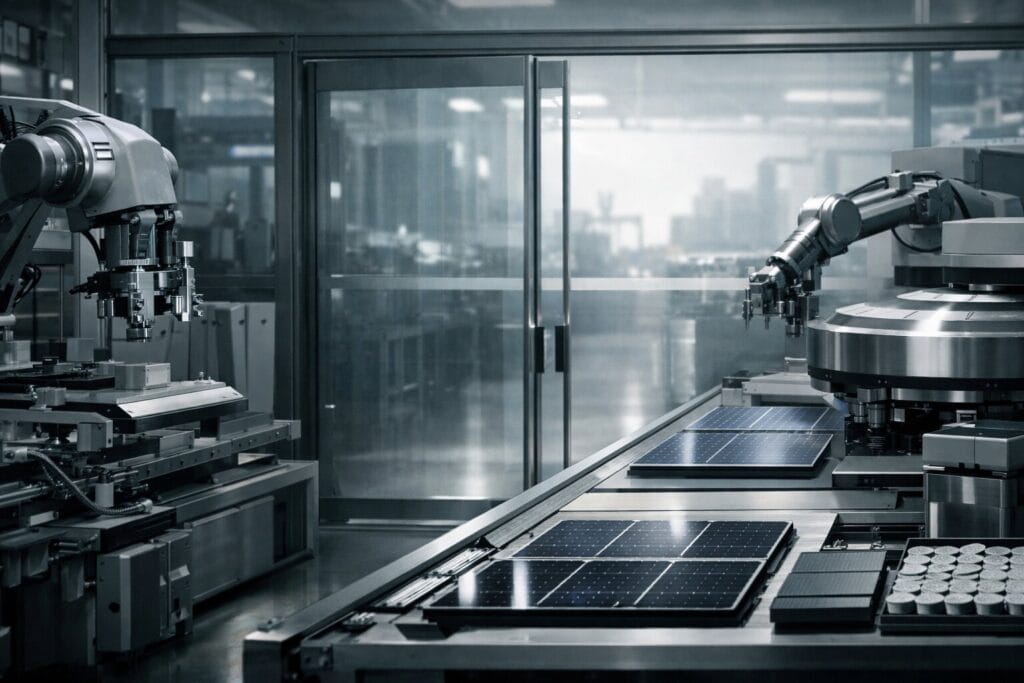
This is why the report matters more than a typical trade skirmish. Panels are visible. Equipment is not. Panels are what countries buy. Equipment is what they use to learn, iterate, improve yields, and build industrial muscle. If the solar trade war shifts from products to tools, the question changes from “Can America import enough solar?” to “Can America make solar at technological parity without China’s machinery?” That is a much harder question, and a more consequential one.
The likely focus includes high-end equipment used to produce heterojunction, or HJT, solar cells. That is not an obscure detail. HJT is one of the higher-efficiency pathways in crystalline-silicon solar, and regulators’ talks included possible curbs on shipments of the equipment needed to make those better-performing panels. When a country can still buy commodity hardware but may struggle to access the best process equipment, the risk is not simply delay. It is technological path dependence. Domestic factories may come online, yet still be nudged toward older processes, weaker economics, or less competitive performance.
The parallel here is less with old-style tariff politics than with semiconductors. In both cases, the real leverage sits not only in the end product but in the process ecosystem behind it: the specialized tools, the supplier networks, the production know-how, the years of iteration that are hard to replicate on command. Solar has long been discussed as a deployment story. It increasingly looks like a manufacturing-sovereignty story too.
America’s solar factory story is real — and incomplete
None of this means the U.S. has failed to make progress. It has not. DOE said in its quarterly industry update that more than 95 GW of manufacturing capacity had been added across the solar supply chain from facilities announced before and after the Inflation Reduction Act, including nearly 42 GW of new module capacity. That is real industrial movement. It helps explain why DOE now says the U.S. can produce enough modules, at least on paper, to cover domestic demand.
But the same DOE material makes clear where the weakness remains. Wafer and cell manufacturing take longer to design, finance, permit, build, and ramp than module assembly. DOE has been blunt that upstream component manufacturing continues to lag and that the United States will remain dependent on imports until the early stages of the solar supply chain scale significantly. In a particularly telling line, DOE notes that only one vertically integrated U.S. manufacturer operates at scale today, and it uses a non-silicon technology. That means the dominant global silicon-based chain is still precisely where the U.S. is least complete.
Reuters’ March report on Tesla made the point even more starkly. Tesla was said to be seeking roughly $2.9 billion of Chinese equipment for solar panel and cell manufacturing in the United States, with a stated ambition of building 100 GW of solar capacity on American soil before the end of 2028. Perhaps the most revealing detail in that report was not the size of the order, but the fact that solar-manufacturing equipment had been excluded from U.S. tariffs in 2024 after domestic panel makers argued they had nowhere else to buy the machines needed to stand up local factories. That single exemption says more than a dozen speeches about the current state of industrial independence. America wants a domestic solar supply chain. At crucial points, it still needs Chinese tools to build it.
Why Beijing might hold back the machines
From Beijing’s perspective, that dependency is strategic capital. The International Energy Agency has noted that China’s share of global manufacturing capacity across the main solar stages — polysilicon, ingots, wafers, cells, and modules — exceeds 80%. It also says China is home to the world’s top 10 suppliers of solar PV manufacturing equipment. This is not an accidental lead. The IEA says China invested more than $50 billion in new PV supply capacity and created more than 300,000 manufacturing jobs across the solar value chain since 2011. In other words, China did not merely win solar by making cheaper panels. It built the industrial architecture behind them.
That architecture is now under pressure. The current discussions come as China’s solar industry grapples with severe overcapacity and financial strain, while executives and analysts worry about helping create future American rivals. The same reporting tied the deliberations partly to concern over Elon Musk’s solar ambitions. If Chinese suppliers help equip a credible U.S. upstream challenger at a moment when China’s own manufacturers are already under stress, Beijing may view that not as normal trade but as strategic leakage. Panels can be exported. Process leadership is harder to give away casually.
There is a larger lesson here. For a long time, many Western climate conversations assumed that low-cost Chinese supply and domestic clean-energy deployment were broadly complementary. Much of the time, they were. But industrial policy changes the equation. Once the U.S. decides it does not merely want cheap solar, but wants to re-onshore meaningful parts of the supply chain, China’s incentives change. The issue is no longer just trade. It is future market structure.
Cheap solar and resilient solar are no longer the same thing
The irony is that China’s dominance helped make solar the success story it is. The IEA says Chinese industrial policy and scale helped drive solar PV cost declines of more than 80%, turning solar into the most affordable electricity source in many markets. In climate terms, that was enormously beneficial. Cheap panels accelerated deployment, lowered emissions, and made decarbonization more plausible.
But the same concentration that drove those cost declines also created fragility. The IEA warns that heavily concentrated supply chains pose vulnerabilities for the energy transition. U.S. solar and wind contract prices rose sharply in the first quarter, with solar PPAs up 13% year-on-year and wind PPAs nearly 24% higher, as developers faced tariffs, labor shortages, permitting challenges, and surging demand from data centers. Solar is still competitive. But it is no longer safe to assume that “cheap” is a permanent background condition. In a world of geopolitical friction, grid bottlenecks, labor scarcity, and AI-driven power demand, resilience starts to cost money.
That is the uncomfortable trade-off now sitting at the heart of climate tech. A fully globalized solar supply chain may be faster and cheaper in the short run, but more exposed to political shock. A more diversified and domestically rooted supply chain may be sturdier, but also more expensive and slower to build. Climate politics spent years pretending these goals naturally aligned. Increasingly, they do not. Policymakers are going to have to choose where they are willing to pay: upfront through industrial policy and redundancy, or later through vulnerability and disruption.
What a serious U.S. resRponse would look like
If Washington takes this seriously, the response should not be another round of headline tariffs alone. Tariffs can shield a market. They do not automatically create process depth. DOE has already identified the harder bottlenecks: financing for upstream projects, investor hesitation after years of failed U.S. solar manufacturing attempts, and the slower, more complex build-out required for wafers and cells compared with modules. A serious strategy would mean directing more capital and policy certainty upstream, not just celebrating module plants or ribbon cuttings.
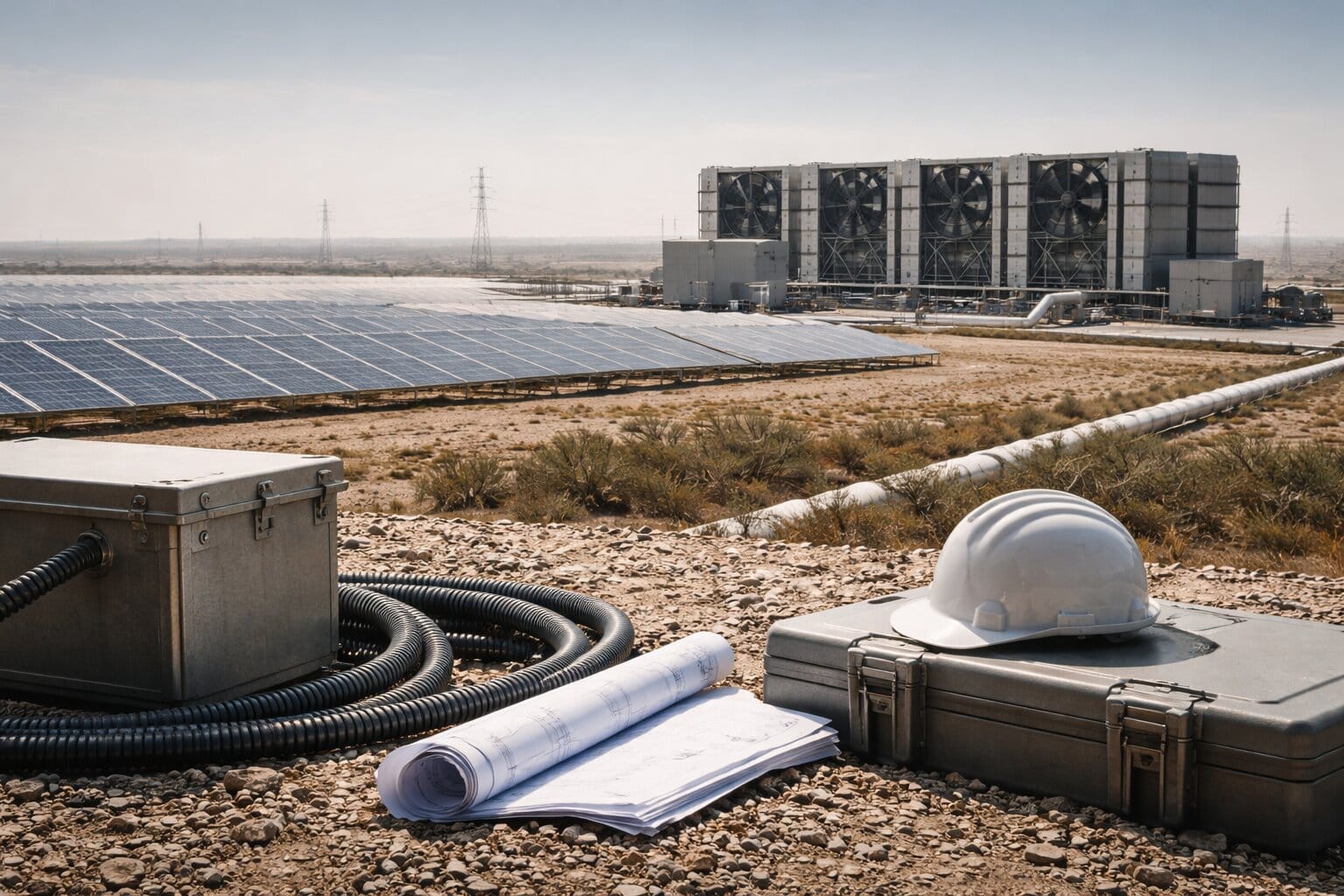
It would also mean treating manufacturing equipment as strategic infrastructure in its own right. That may sound technical, but it is the core issue. A country can localize assembly and still remain dependent on foreign process machinery, foreign learning curves, and foreign supplier ecosystems. The solar-equipment story now suggests that climate-tech policy has matured into something more demanding than subsidy design or deployment targets. It is about whether a country can reproduce the industrial intelligence embedded in the supply chain.
The next phase of the solar contest will not be won by the country that can buy the cheapest panel. It will be won by the one that can reproduce the know-how, machinery, and financing ecosystem behind the panel at scale. Beijing’s deliberations, even if they do not become formal policy, have already exposed the deeper reality. The clean-energy transition is no longer just a race to install more capacity. It is a race to control the industrial systems that make that capacity possible. For climate tech, that may be the more consequential frontier.