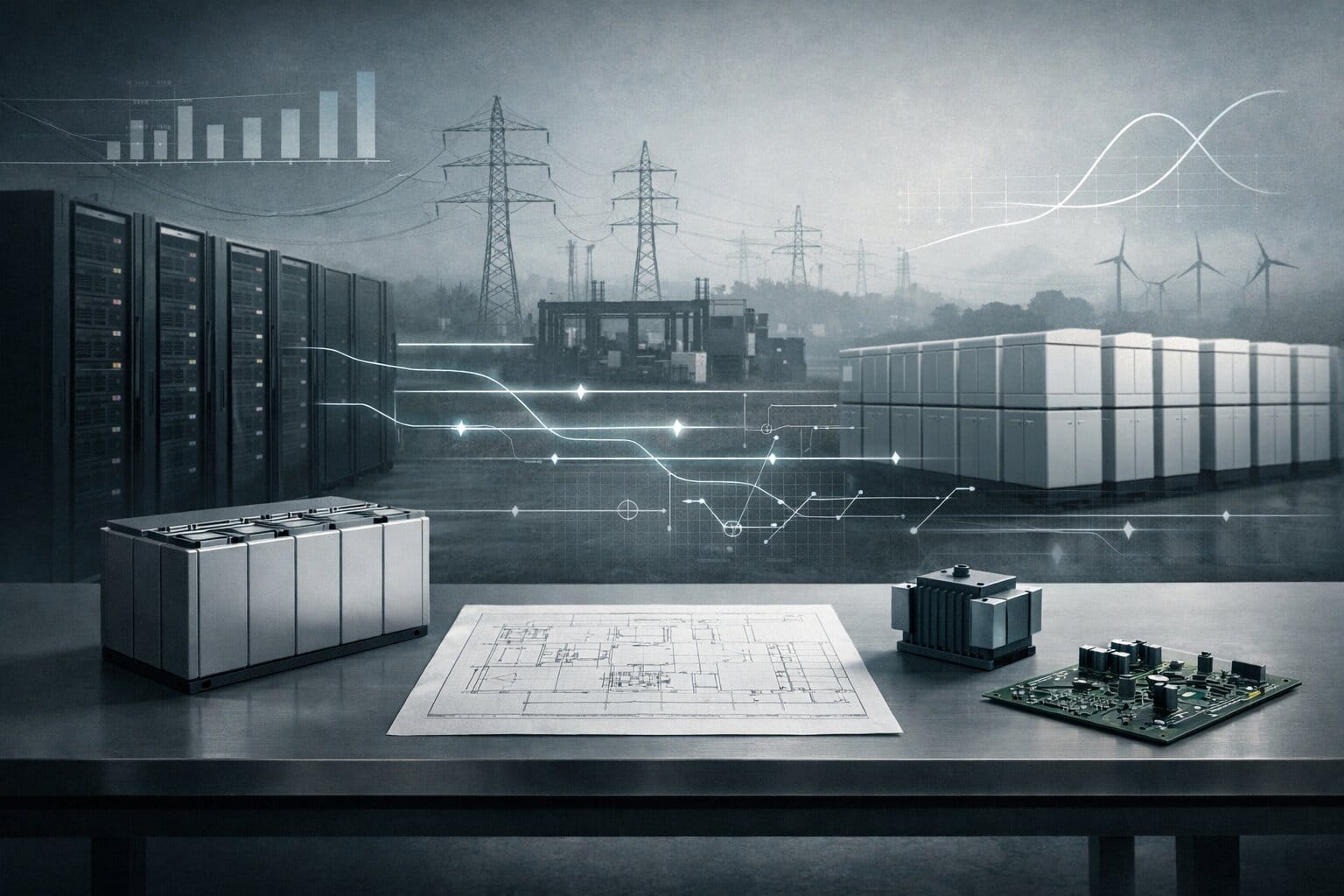
Crusoe’s latest battery deals are not really about batteries. They are about what happens when AI collides with the grid — and why the next winners in climate tech may be the companies that can deliver firm, flexible power faster than anyone expected.
On March 24 and March 25, Crusoe made two moves that read like more than routine dealmaking. In Nevada, it expanded its Redwood Materials project from four to 24 modular data centers after a 12 MW / 63 MWh second-life battery microgrid delivered 99.2% operational availability over seven months. Separately, it signed an agreement with Form Energy for 120 MW and 12 GWh of multi-day iron-air batteries beginning in 2027. Taken together, the message is hard to miss: in AI, electricity is no longer background infrastructure. It is becoming the core constraint.
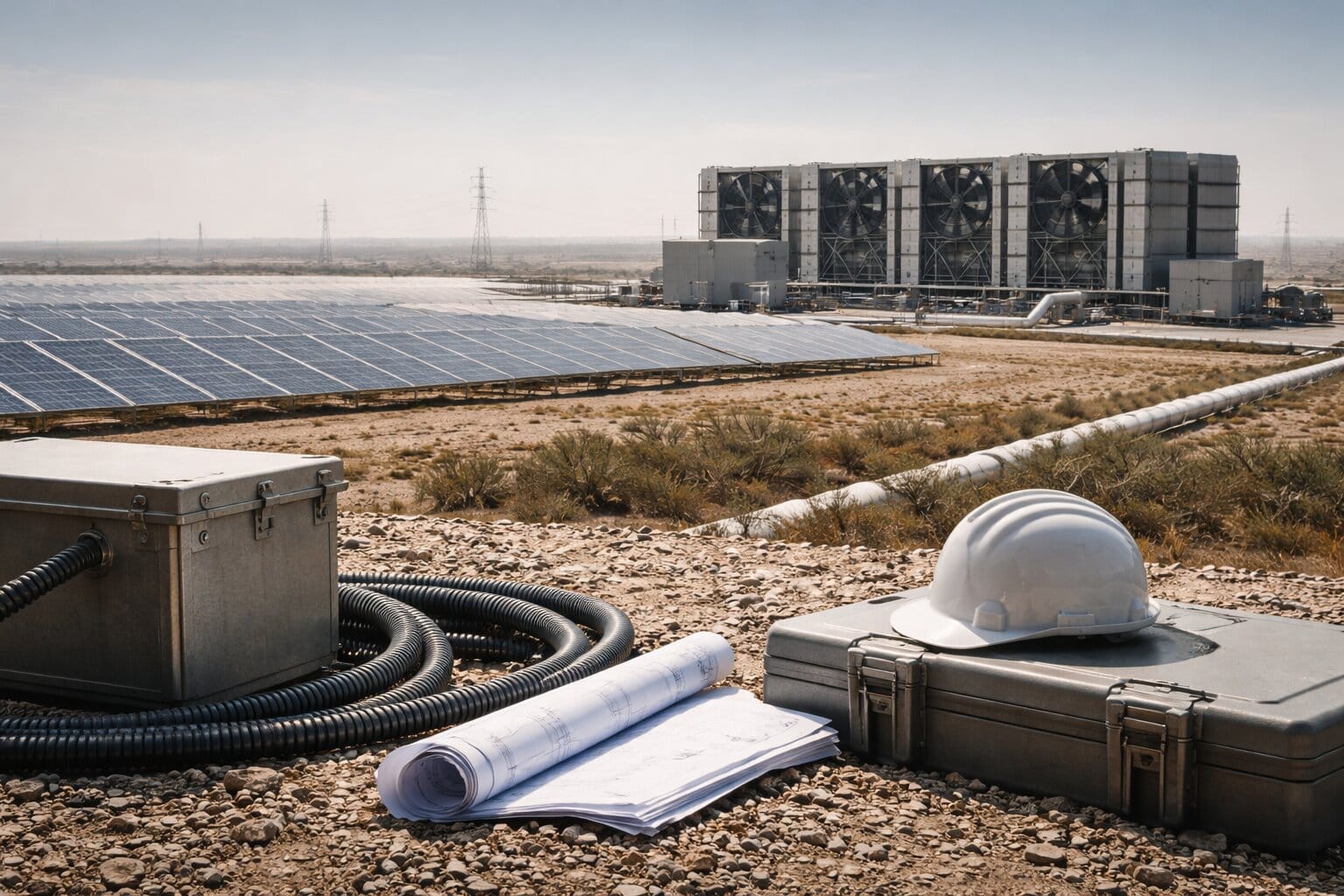
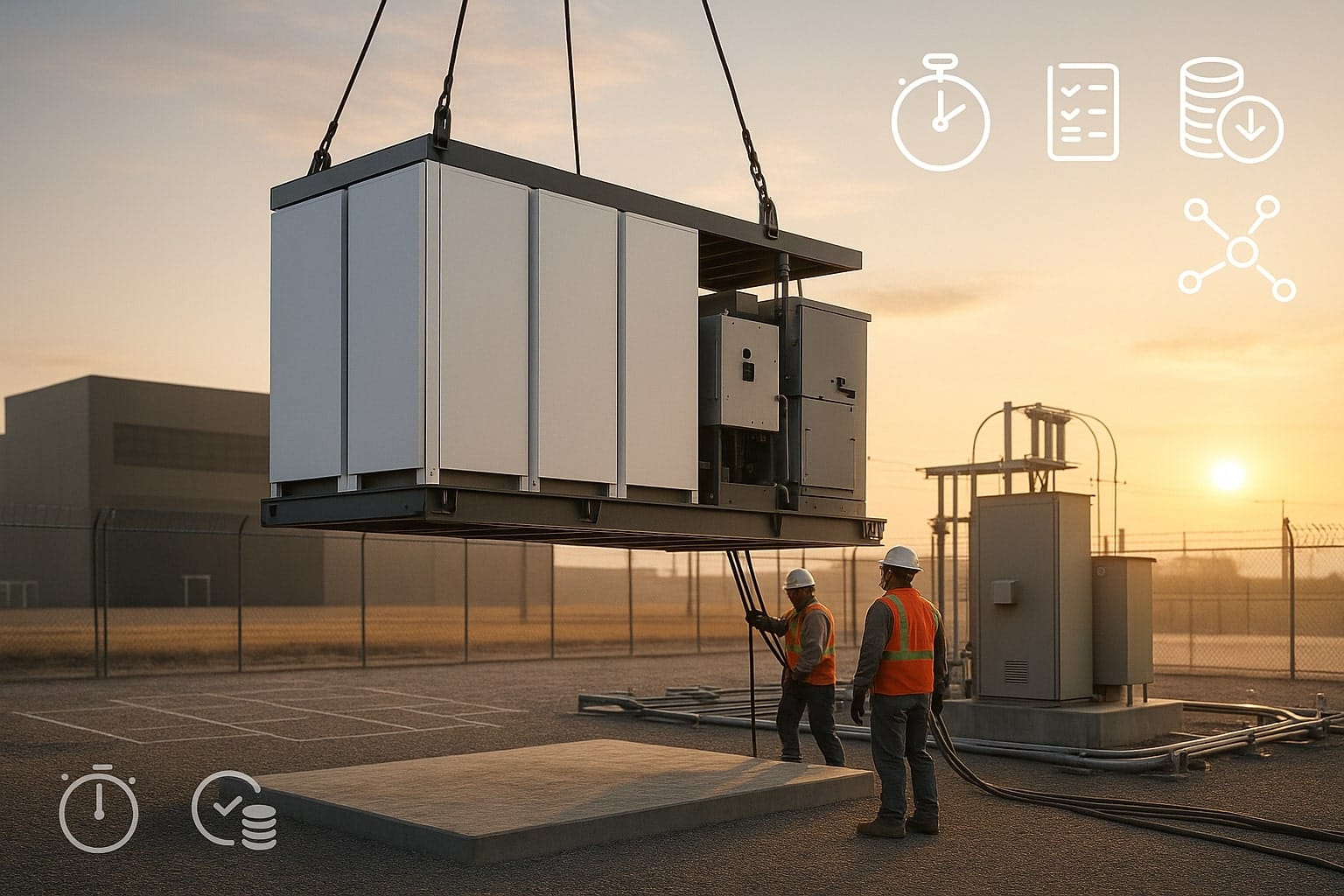
What makes this moment important is not the optics of tech companies buying something that looks climate-friendly. It is the motive. These deals are about speed-to-power: securing electricity, storage, and reliability alongside compute buildout rather than waiting years for the grid to catch up. Form’s system is designed to store and discharge power for up to 100 hours, while Crusoe’s Nevada expansion leans on repurposed EV packs and modular infrastructure to bring new compute online in months rather than the slower cycle of conventional projects. That is not a sustainability side quest. It is a deployment model.
This is not really a battery story
The deeper story is that AI’s physical footprint is arriving faster than the power system was designed to absorb it. Berkeley Lab estimates U.S. data centers used 176 TWh of electricity in 2023, or about 4.4% of total U.S. electricity demand, and could rise to 325–580 TWh by 2028, or 6.7% to 12% of the total. EPRI’s February 2026 update is even more aggressive, putting 2024 U.S. data-center consumption at roughly 177–192 TWh and a 2030 range of 380–790 TWh, which would equal 9% to 17% of national electricity use. Globally, the IEA expects data-center electricity demand to roughly double to about 945 TWh by 2030.
Those headline totals are large, but the more important issue is where the load lands. Data centers do not spread themselves evenly across an economy the way household electrification does. EPRI says Virginia’s data centers already consume more than a quarter of the state’s electricity and could reach 41% to 59% by 2030, while as many as seven additional states could see data centers exceed 20% of electricity usage by decade’s end. The IEA makes a similar point globally: the absolute share of power may still look manageable in aggregate, but the concentration of demand in specific places makes integration much harder.
The bottleneck has moved from chips to power delivery
That is why the most revealing number in the market right now may not be chip supply. It may be project readiness. Sightline Climate says it is tracking 190 GW across 777 large data centers and AI factories announced since 2024, with at least 16 GW slated to come online in 2026. But only about 5 GW is actually under construction, while roughly 11 GW remains announced with no visible construction progress. Based on last year’s slippage, Sightline says 30% to 50% of the 2026 pipeline may not materialize on time.
That helps explain why the power strategy itself is changing. Sightline says on-site and hybrid power approaches still account for less than 10% of projects by count, yet represent nearly half of announced capacity. Google, meanwhile, has signed utility agreements that make up to 1 GW of its data-center demand available for curtailment during grid stress, which is a striking sign that hyperscalers are already behaving less like passive electricity customers and more like system participants. The U.S. EIA’s decision to begin pilot surveys in Virginia, Washington State, and Texas is another tell: for a sector shaping the grid this quickly, policymakers still lack basic visibility into how much power data centers are using and how they are sourcing it.
Why batteries suddenly matter
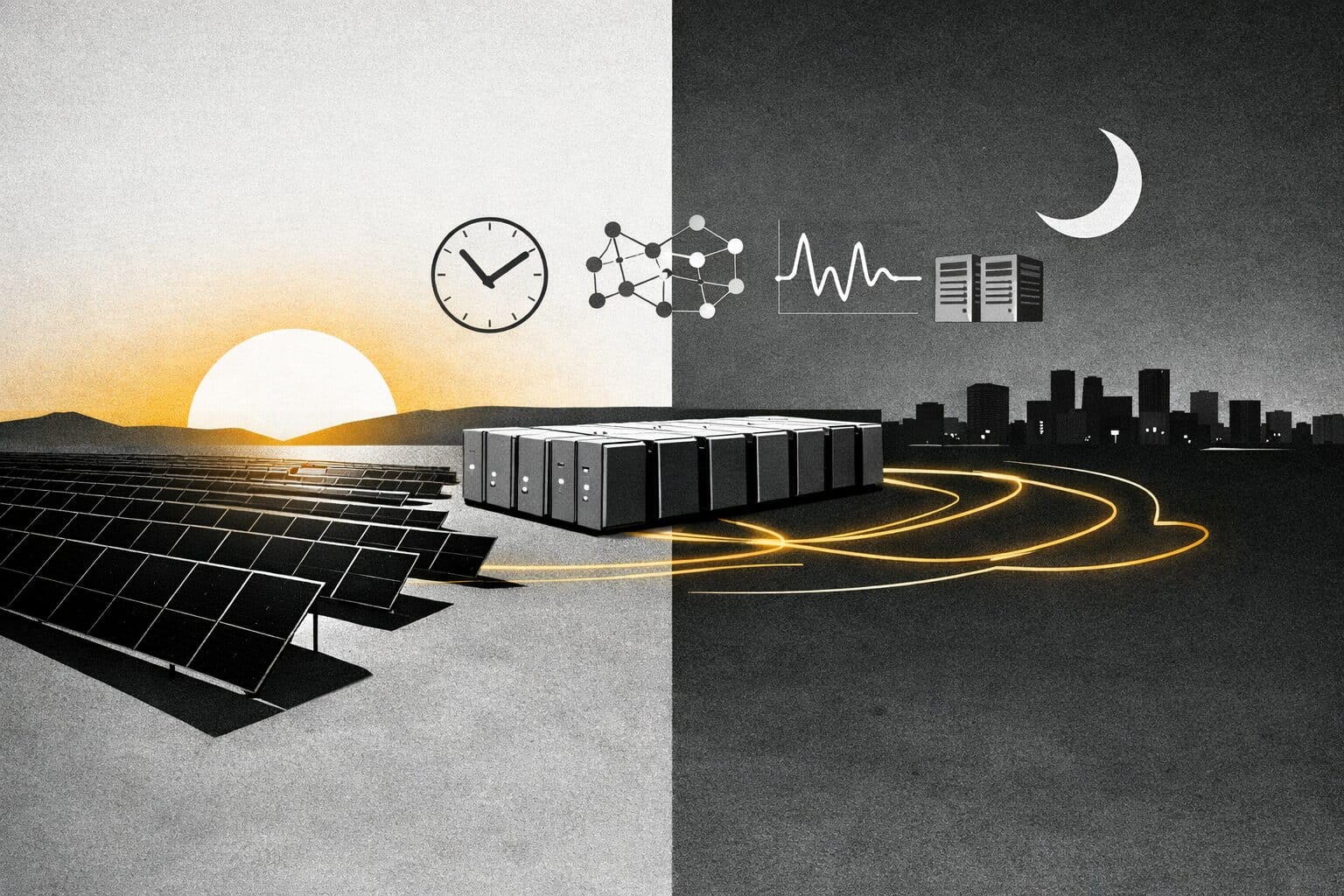
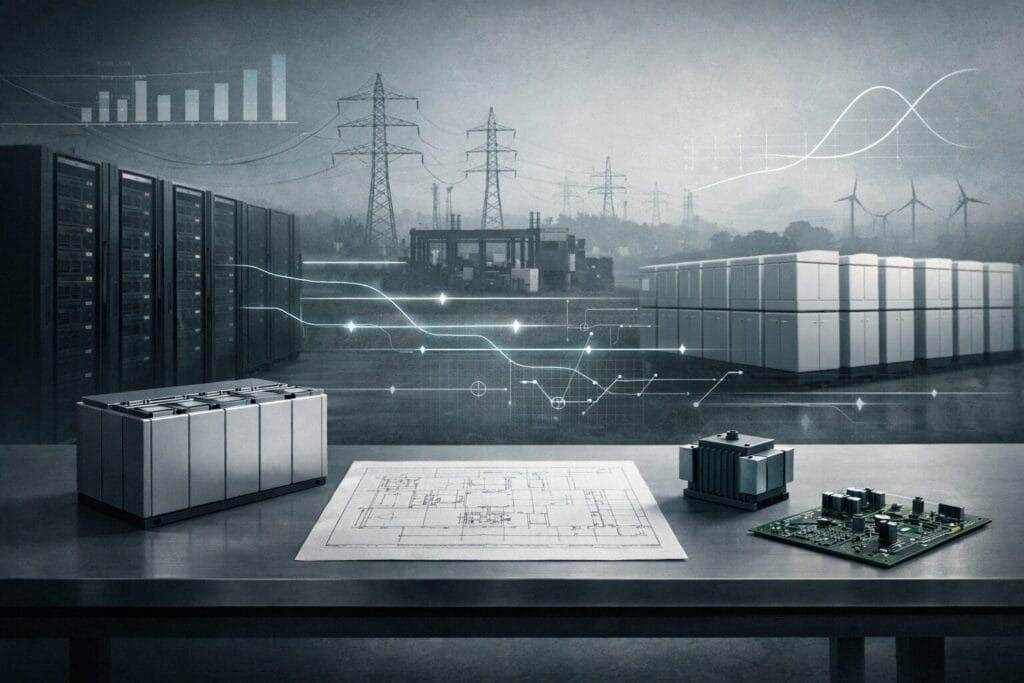
This is where climate tech starts to move from “nice to have” to “cannot build without it.” Reuters reported that the U.S. added a record 57.6 GWh of battery storage in 2025, up 30% from 2024, but that most of it was still short-duration lithium-ion designed for roughly two to four hours. Long-duration storage, by contrast, can deliver more than eight hours and in some cases several days, which makes it much more relevant for AI workloads that do not care whether the sun is shining or the wind is blowing.
The Form-Redwood contrast is especially revealing because it shows two very different routes to the same destination. Form is betting on new chemistry: iron-air batteries built around cheap materials and 100-hour duration. Redwood is betting on resource efficiency and deployment speed: take EV batteries that still have usable life, orchestrate them in a microgrid, and get compute running quickly on top of solar and storage. One path is a manufacturing-led bet on multi-day firming. The other is a circular-economy bet on faster, cheaper, good-enough resilience. Both are suddenly commercially relevant because AI has made reliable electricity a front-end constraint rather than a back-office utility bill.
The climate upside is real — but it is not automatic
There is a genuine upside here for climate tech. Reuters Events reported that North American solar PPA prices rose 9% year over year in the fourth quarter of 2025 to $61.7/MWh, while wind PPAs also rose 9% to $73.7/MWh. In ERCOT, the fair value of wind agreements rose 16% in 2025 and solar rose 8%. That is not just a pricing story. It is evidence that large data-center buyers are reshaping the clean-power market, pushing developers toward bigger portfolios, more complex structures, hourly matching, and storage-backed products that look more like infrastructure packages than standalone renewable contracts.
Reuters Events also reports that developers are planning 56 GW of on-site generation for data centers, equal to roughly 30% of all planned data-center capacity, while many hyperscalers are moving toward co-located generation, storage, and demand-side flexibility. In other words, the old clean-power story — buy a solar farm, claim annual matching, move on — is giving way to a tougher but more durable market in which climate-tech companies are rewarded for firmness, controllability, and delivery speed.
But the downside is just as real. Reuters reported on March 23 that NextEra has secured land in Texas for a gas plant expected to exceed 5 GW to support a major data-center campus, while the EIA has warned that surging electricity demand from data centers could lift U.S. fossil-fuel generation over the next two years. That is the uncomfortable truth underneath the AI-power boom: if clean firming, grid upgrades, and flexible demand do not scale fast enough, the market will not wait politely. It will burn more gas.
The real winners may be the unglamorous ones
For climate tech, that may be the most important lesson of all. The next breakout winners may not be the companies with the most elegant decarbonization pitch. They may be the companies that solve the boring, physical constraints that now sit between AI demand and actual megawatts: long-duration storage, second-life battery systems, flexible load management, substations, transformers, and the software that lets operators treat data centers as grid assets rather than inflexible sinks. That reading is consistent with what EPRI, DOE, and the latest market data are all showing: power plants, transmission lines, and substations take years to plan and build; data centers can arrive in a fraction of that time; and even the transformer market is already under strain from rising demand tied to data centers and electrification.
For years, climate tech sold itself as the future. AI may do something more valuable: force parts of climate tech into the present tense. When hyperscalers start paying not just for electrons but for dispatchability, duration, flexibility, and interconnection advantage, the market changes. Storage stops being a complement to renewables and starts becoming an enabling layer for the digital economy itself.
That is why Crusoe’s battery deals matter beyond Crusoe. They suggest the AI race is becoming an infrastructure race, and infrastructure races reward whoever makes the physical system work. If climate-tech companies can do that — faster than gas, cheaper than delay, and more reliably than annual-offset accounting ever could — they will not just benefit from AI’s rise. They will help define its industrial architecture